
DIVERSAMENTE.BOLOGNA@GMAIL.COM
CF 02092041207
P.Iva 03741671204
pec: postmaster@pec.associazionediversamente.org
codice univoco: K0ROACV
Supervisione
L’associazione Diversa/mente conduce incontri di supervisione rivolti a psicoterapeuti, psicologi, psichiatri, assistenti sociali, mediatori culturali, educatori, insegnanti e in generale a chi opera in contesti multiculturali. La supervisione utilizza il lavoro di gruppo con particolare attenzione all’analisi del controtransfert e alle componenti culturali.
Sono stati realizzati gruppi di supervisione con: Centro Donna Giustizia di Ferrara, progetto “Oltre la Strada”; Servizio per Rifugiati e Richiedenti asilo del Comune di Venezia; Spazio Giovani di Bologna; Servizio di Neuropsichiatria Infantile ASL Bologna.
Utilità della supervisione in contesti multiculturali
La soggettività dell’operatore – impegnato nel lavoro di cura, in quello sociale ed educativo, e persino nella ricerca scientifica – è una variabile che non può essere eliminata.
La convinzione di realizzare interventi neutrali e oggettivi, in quanto basati sull’uso di strumenti standardizzati, di griglie o di rigidi protocolli, è un’illusione molto diffusa soprattutto in anni recenti. Come già sosteneva George Devereux – nel suo testo del 1967 “Dall’angoscia al metodo nelle scienze del comportamento” – l’osservatore della società, nelle immagini e negli affetti che essa suscita in lui, non può essere esterno e imparziale, ma è continuamente coinvolto in essa. È necessaria quindi una continua e rinnovata consapevole rettitudine scientifica da parte dell’osservatore, chiamata da Devereux etica dell’incontro.
Secondo Devereux, il modello epistemologico della psicoanalisi, il cui nucleo sta nella dialettica transfert-controtransfert, è in grado di chiarire i dilemmi epistemologici delle altre discipline che si occupano del comportamento umano. L’interazione transfert-controtransfert diventa per Devereux non più solo un procedimento tecnico della psicoanalisi, ma un paradigma generale del rapporto osservatore-osservato nel campo degli eventi umani.
In particolare, la soggettività dell’operatore e le sue reazioni emotive vengono messe in gioco di fronte a situazioni di sofferenza per le quali mancano strumenti e dispositivi adatti a comprenderla ed elaborarla. Quando queste reazioni soggettive (che tecnicamente la psicoanalisi chiama controtransfert) non vengono riconosciute e rimangono nella solitudine dell’operatore, possono agire inconsapevolmente e in modo difensivo sulle rappresentazioni che l’operatore si fa dell’utente, sulle scelte operative e sulle modalità con cui vengono attuate. In tale modo queste reazioni soggettive finiscono per costituire un rischio sia per l’utente che per la salute psichica dell’operatore, il quale le rimuove anziché gestirle e trasformarle.
Tutto ciò si complica nella relazione transculturale. In essa non entra in gioco solo il controtransfert individuale, ma anche una più ampia reazione difensiva, attivata dalle differenze culturali, che agisce sia nel singolo operatore che nella organizzazione dei servizi, quasi sempre in modo inconsapevole. Infatti quando un fenomeno – sensazione, emozione, percezione, spiegazione – che proviene da uno specifico mondo culturale non può essere assegnato a una categoria a noi familiare, è facile difendersi interpretandolo erroneamente o comunque squalificandolo come irrilevante se non addirittura primitivo.
La supervisione è, fin dagli esordi della psicoanalisi, lo strumento più importante attraverso cui l’analista controlla e confronta il proprio fare e il perseguimento di un etica dell’incontro. Questo strumento dovrebbe essere utilizzato anche dagli operatori e da chiunque si occupi del comportamento umano.
Email: diversamente.bologna@gmail.com
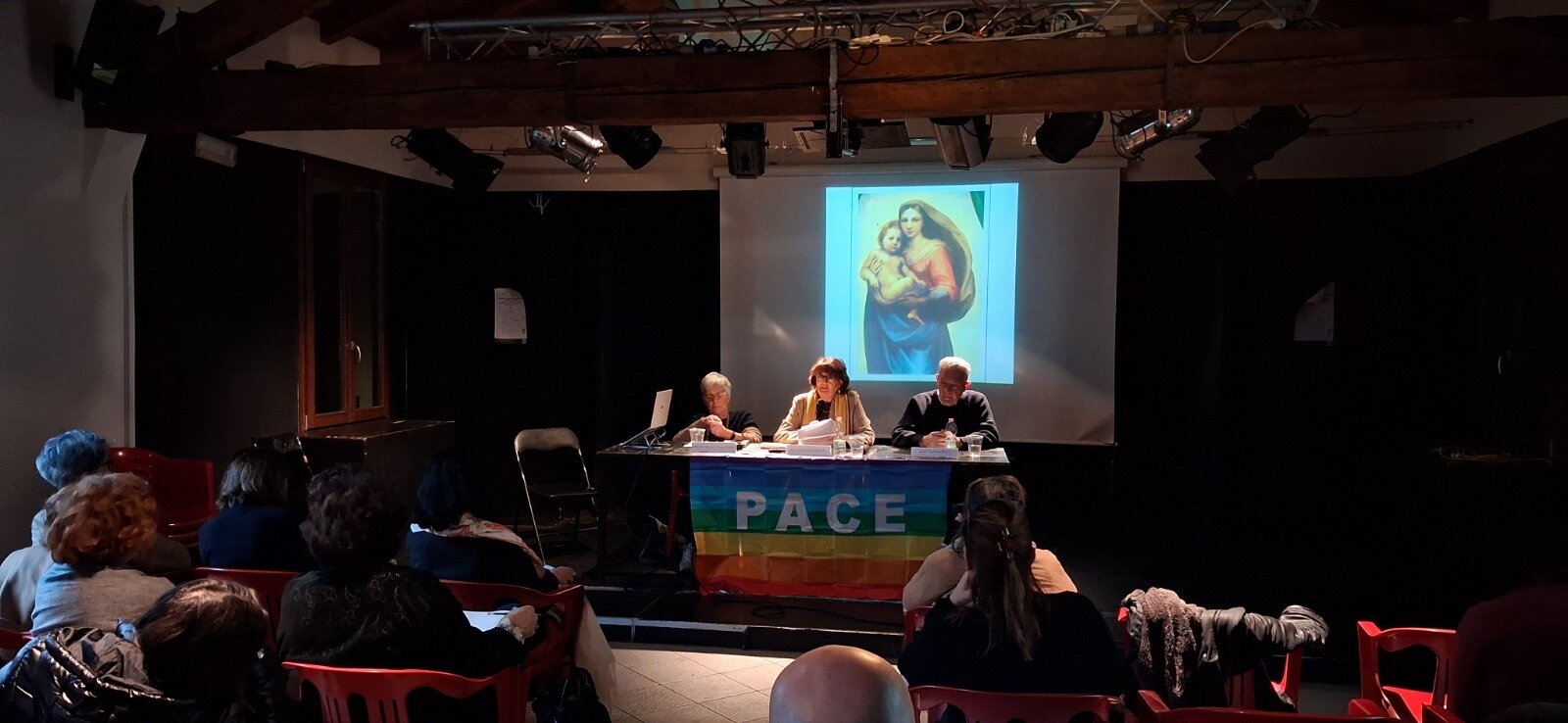
Ripensare l’accoglienza tra trauma e geopolitica
Admin
22/01/2026 16:24
22/01/2026 16:24
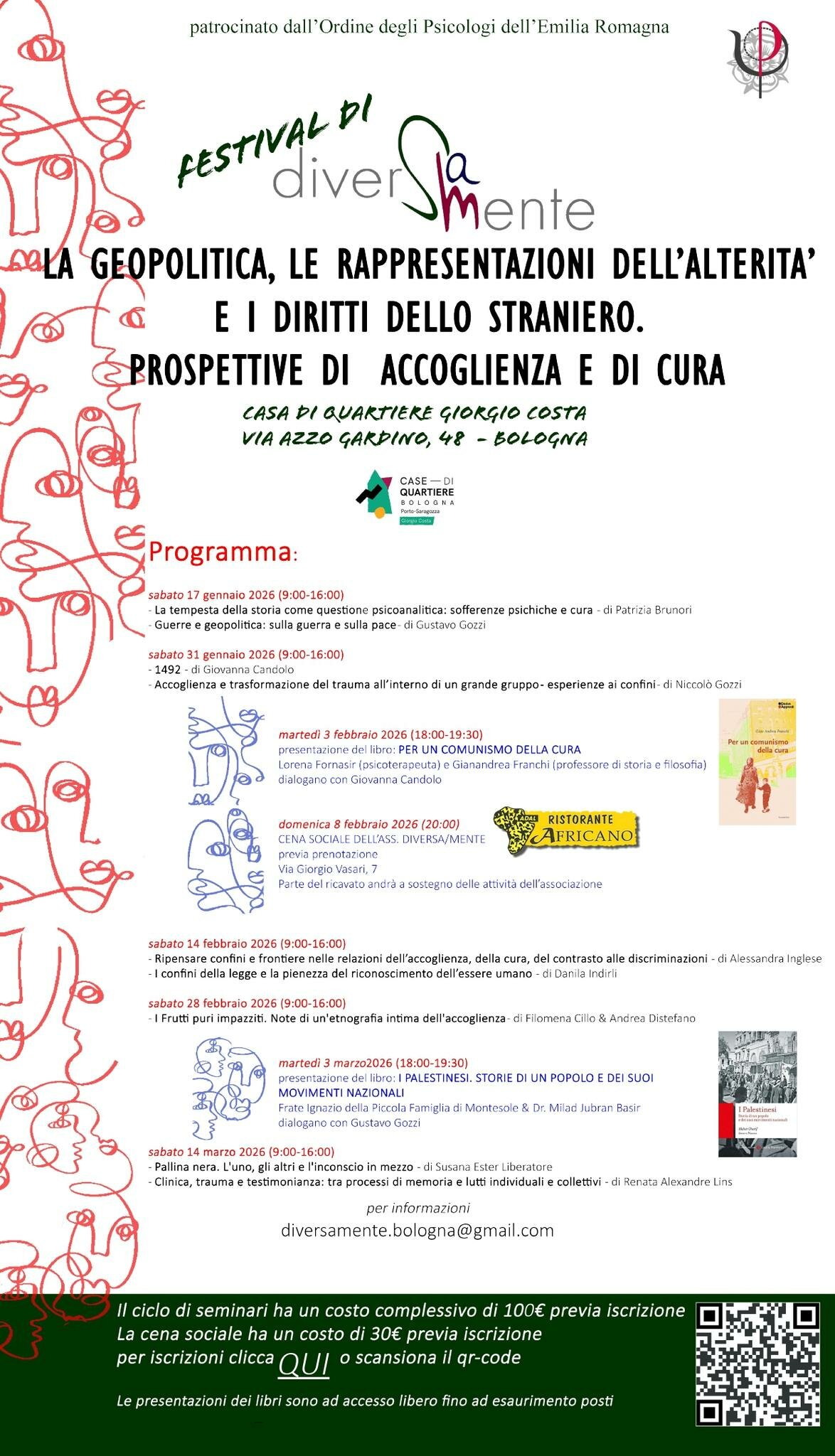
La Geopolitica, le Rappresentazioni dell'Alterità e i Diritti dello Straniero. Prospettive di Accoglienza e d
Admin
15/12/2025 09:33
15/12/2025 09:33
Le Conseguenze delle Guerre e Il Futuro delle Democrazie
Andrea Distefano
31/10/2024 19:36
31/10/2024 19:36

Secondo Rapporto dell’Osservatorio dello Sportello Antidiscriminazioni
Admin
01/03/2024 18:06
01/03/2024 18:06

Decostruire il razzismo. Interventi per le vittime di discriminazione
Renata Alexandre Lins
06/10/2023 10:57
06/10/2023 10:57

Festival Francescano 2023
Andrea Distefano
24/08/2023 20:17
24/08/2023 20:17

Presentazione dei volumi di DiversaMente a Lecce
Andrea Distefano
23/08/2023 12:38
23/08/2023 12:38

26 maggio - Presentazione dei due libri dell'associazione Diversa/mente
Admin
08/05/2023 23:46
08/05/2023 23:46

Diritti e Comunità plurali. Clinica transculturale e società dell’inclusione - il nuovo libro di Diversa/m
Admin
08/05/2023 23:19
08/05/2023 23:19
.png "Laboratori Genitori")
Laboratori Genitori
Admin
02/12/2022 18:28
02/12/2022 18:28

COLLABORAZIONE CON QUARTIERE SAVENA E CON LA RETE DELLE ASSOCIAZIONI
Admin
21/03/2022 10:23
21/03/2022 10:23

Il nostro nuovo sito web è online!
Admin
20/02/2022 15:37
20/02/2022 15:37

Progetto Savena Futura – Formazione Ripartire dal territorio
Admin
06/01/2021 00:00
06/01/2021 00:00

Al di qua al di là dei confini – è uscito il testo relativo ai seminari di Diversa/mente
Admin
04/07/2020 01:00
04/07/2020 01:00

4 luglio 2020 Ventesimo Compleanno di Diversa/Mente
Admin
04/07/2020 01:00
04/07/2020 01:00

Assemblea straordinaria per il giorno 18 giugno pv
Admin
18/05/2020 12:18
18/05/2020 12:18

Supporto psicologico transculturale online per l’emergenza Covid-19
Admin
18/05/2020 01:00
18/05/2020 01:00
COLLABORAZIONE CON QUARTIERE SAVENA E CON LA RETE DELLE ASSOCIAZIONI
Admin
21/03/2022 10:16
21/03/2022 10:16

1. Centro Fanon
Admin
11/02/2021 01:25
11/02/2021 01:25

2. Fondazione Silvano Andolfi. Servizio di Consulenza Psicologica alle Famiglie Straniere
Admin
11/02/2021 01:23
11/02/2021 01:23